Assistant Professor- Commerce || Haryana Public Service Commission
Are you targeting the Assistant Professor (Commerce) exam with HPSC in year 2022? You have 2 options of preparing with Human Peritus:
Option 1: Study Material Package (Rs 7800):
Under this preparation plan, we will provide you content for 100% coverage of syllabus. You will get 3 things:
(i) 11 printed booklets to cover 100% syllabus of both Papers
(ii) Online questions bank of 4000 questions, with detailed explanation
(iii) 5 full length mock test papers.
With these 3 things, you do not need to look at any other book, not even previous papers. Depend completely upon us for confidence of facing any question in HPSC exam. (watch this video to look at everything)
Option 2: Study Material + Recorded videos (Rs 15,800):
Other than what is given in option 1, you will get recorded videos of the complete course. Going through this course will help you in understanding the concepts faster. Check out some of recorded videos in the middle of this page to assess the style and quality of teaching.
What Human Peritus offers
Option 1: Study Material Package ( Rs 7800)
The Study Material Package has 3 Components:
1. Eleven Printed Booklets to cover the entire syllabus
2. Online question bank of 4,000 questions, which are arranged topic-wise. Each question with detailed explanation
3. Five Full length mock test Papers.
- We will courier you 11 Printed Booklets of Commerce Syllabus
- It will cover 100% syllabus, as prescribed by UGC NET (new syllabus)
- Check out few sample booklets (takes 40-50 seconds to download)
Legal Aspects of Business
Banking and FI
Business Statistics
- The access to online questions will be made available within 1 day of payment.
- These 4,000 questions are arranged in approx. 180 sub topics (practice more, where you feel the need).
- These questions will include every question that has been ever asked in any previous UGC NET from 2009 to 2021.
- Each question with not only answer but detailed explanation.
- 5 Full length Mock Tests papers
- Watch this video to check out how everything looks like.
- Access to Online Question Bank will be till exam date of HPSC or 1 year (whichever happens earlier).
Click on + sign to understand, what is included in each of 3 Components.
Enroll Now by Paying Online or through Cash on Delivery.
Going through these 3 components, will get you 100% syllabus coverage and confidence of facing any question in the exam. You do not need anything else (no other book, no previous papers, nothing else). You can completely DEPEND UPON US for everything.
Option 2: Study Material Package + Recorded Videos ( Rs 7800 + 8000 = 15800)
Other than study material package under Option 1, you will get recorded videos of all classes, which we conducted especially for Commerce syllabus
- The recorded videos of around 200 hours covers 100% syllabus of Commerce.
- 10-12 different subjects matter experts have covered the entire syllabus.
- Access to these recorded videos will be till exam date of HPSC or 1 year (whichever happens earlier).
- The recorded videos are made available on an app, which you can install on both mobile and desktop.
- You can watch recorded videos on 2 devices, One Mobile/Tab and One Desktop/Laptop.
- Fees for both Study Material + Recorded Videos = 7800 + 8000 = Rs 15800
- This fee includes 18% GST, courier charges and everything else. No other charges.
- There are no discounts. Please do not ask for it.
- There is no option of refund in this option.
- We advise you to check multiple recorded videos in the middle of this page. The quality and style of teaching will be same.
- Fees for both Study Material + Recorded Videos = 7800 + 8000 = Rs 15800
- Recorded Videos of full course
- Printed Study Material Booklets along with online question bank & mock tests
- Offline Support System- Ask your doubts through email
- Continuous mentoring, during your preparation journey for exam date of HPSC or 1 year (whichever happens earlier).
- The access to recorded videos and online question bank will be for 1 year from the date of enrollment.
- First, read this page completely, including FAQs, to understand everything.
- If convinced, pay the fees using Green buttons. Any queries, immediately call us at 9717781110.
- After payment, you will get confirmation email from us within 24 hours. This email will have further steps on enrollment.
- If you have any doubts, at any point of time, immediately contact using Blue buttons on left and right bottom.
Recorded Videos = Rs 8,000
Study Material Package = Rs 7,800
TOTAL = Rs 15,800
This fees includes GST
Enroll NOW using following green button
Anything on your mind, which you did not find here, please let us know.
MUST READ- Before you place the Order
- We make sure that the courier is despatched within 2 “working days”, after receiving payment/order.
- The courier reaches all over India, usually within 6-7 days. There might be delay of few more days because of lockdown, floods or any other local factor.
- You will get an email on courier tracking number, by next day of the despatch.
- Please note that our responsibility does not stop at despatching the courier. It is our responsibility that the courier reaches at your doorstep.
- If there is damage, loss or excessive delay (beyond 20 days) to the packet, we will send you another packet.
- Please keep reading all our emails carefully. If any doubt, immediately write us at contact@humanperitus.com
- You will get an email on username/password for Online Test Platform within 1 day (by evening of next working day)
- The email will have complete instructions on how to access everything. Read carefully.
- The online access to Test Platform will be till exam date of HPSC or 1 year (whichever happens earlier).
- If you are enrolled in Live Classes, you can ask directly from the teacher.
- If you are enrolled for only Study Material Package, we have a system in place for your doubts.
- You can email your doubts at contact@humanperitus.com. Then that email is assigned to subject matter expert in our team and you will receive clarification over email/call within 1-2 days.
- We update our content every 6 months (sometimes before 6 months). We did last update in Jan 2022.
- Also, if there are some important updates during these 6 months, we share them through our Online Test Platform.
- It is our responsibility, that the updates are communicated to you before every exam.
- We make large number of changes every 6 months because of (i) changes in exam pattern/difficulty/topics (ii) changes in topics of current affairs (iii) correct the mistakes in content.
- Older content is never sold and only updated content is available, whenever you purchase.
- The best way of reaching us is via email at contact@humanperitus.com. We always reply back to email within 1 working day.
- You may also call us at 9717781110, but email gives us better window to prepare for your queries. Sometimes, we may miss your calls. In that case, you will always get a call back within 24 hours (there is no need of repeated calls).
- There is no provision of refund for Study Material Packages and Recorded Videos.
- Any attempt of illegal circulation of content will lead to immediate termination of access to all resources and the fees will not be refunded.
- Any attempt to sell Human Peritus content on social media/internet will invite police complaint and subsequent FIR under various provisions of law:
- Section 63 of Copyright Act 1957 (knowingly infringes or abets the infringement of the copyright)
- Section 420 (cheating by the way of false representation) under sections 403, 406, 408, 420, 471 and 120B of Indian Penal Code 1860 for dishonest and illegal misappropriation of money, criminal breach of trust, cheating, fraud and criminal conspiracy to commit fraud
- Section 29, 103 and 104 of Trade Marks Act 1999 (infringement and penalty)
- Section 1(2) read with Section 75 of the Information Technology Act 2000.
Exam Pattern and Selection Criterion
There is only one paper, which is objective type and subject specific (Commerce). The paper has 100 questions to be solved in 120 minutes. There is no negative marking.
The overall selection depends upon Written, Interview and Personal Achievements Score, the weightage of which is 50:20:30 (in same order). Total score is 100.
The personal achievements score (total 30) depends upon marks of class tenth (5 marks), class twelfth (5 marks), graduation (3 marks), consistency (3 marks), post graduation (3 marks), higher qualifications like MPhil and PhD and NET (3 marks), D. Sc./D. Litt. (3 marks), research publications (3 marks) and others (2 marks).
The number of candidates called for interview is 3 times of the number of vacancies. The number of vacancies was 524 in 2019.
The expected cut of will be somewhere between 60 to 70 (out of 100 marks of written exam) for unreserved category.
June 2019 exam analysis
The last paper was conducted in 2019. The syllabus of the exam was same as the syllabus of UGC NET (exact copy paste). However the difficulty level is lower than that of UGC NET. The UGC NET exam has questions on “conceptual understanding”, while this exam has “fact based” questions.
The paper had 100 questions to be solved in 120 minutes. There was no negative marking.
Eligibility of Qualification and Age
You need three things, to be eligible:
1. At least 55% marks in post graduation (it is 50% for ST/SC/Disabilities/those who did 10th from rural schools in Haryana).
2. NET or PhD
3. Knowledge of Hindi or Sanskrit up to class 10th level.
How to Start Preparation - Preparation Strategy
Although, the exact syllabus will be available only after HPSC comes out with its official notification, you should not wait for the notification to start your preparation. It will be too late by then. The notification is EXPECTED to be out in mid 2022.
The competition is tough for this coveted job, as the number of aspirants is high. Consider this analysis. In UGC NET, which has upper age limit of 30 years for JRF, approx 1,00,000 students compete in Commerce subject. Now think, how many students will be eligible in HPSC, where upper age limit is 42-47 years. On top of that, consider this fact. The UGC NET provides “just eligibility” and no assurance of job. On the other had, the HPSC provides you real class-1 gazetted officer job of Assistant Professor.
So, start preparing now, so that you put up a great score in written itself.
But, how do we start preparing, when the syllabus is not known? Generally HPSC follows the syllabus and exam pattern of UGC NET. In 2019 exam of HPSC, the syllabus was copy paste of UGC NET syllabus. Our advice is that you should start preparing with the latest syllabus of UGC NET. Even if HPSC comes out with its own syllabus, it is not likely to have variation of more than 5-10% from latest syllabus of UGC NET.
Anything else, you want to ask, immediately “Contact Us”. You will get response within 24 hours in your mailbox from our experts.
How Study Material Package looks like
Recorded Class- Valuation of Stocks
Recorded Class – Probability Distribution
Recorded Class- CSR
Recorded Class- Marketing Management
Recorded Class – Theories of Management
Recorded Class- CSR
Recorded Class- HR Planning
Syllabus Commerce HPSC- Assistant Professor
In 2019, the syllabus of the exam was same as the syllabus of the UGC NET. In fact, it was copy paste. The next exam of HPSC College Cadre- Assistant Professors is likely to be conducted in 2022. It may be noted that the UGC has changed its syllabus in June 2019. Thus, it is likely that, with new notification in 2022, the HPSC will also change its syllabus (assuming it will be copy paste of UGC NET).
The Older Syllabus of UGC NET (which was also syllabus of 2019 exam of HPSC) is given below.
The New Syllabus of UGC NET is also given below. It is expected syllabus of 2021 exam for HPSC Assistant Professor exam.
Expected Syllabus of 2021 exam- New Syllabus of UGC NET
Unit 1. Business Environment and International Business
Concepts and elements of business environment:
Economic environment- Economic systems, Economic policies (Monetary and fiscal policies);
Political environment Role of government in business;
Legal environment- Consumer Protection Act, FEMA;
Socio-cultural factors and their influence on business;
Corporate Social Responsibility (CSR)
Scope and importance of international business; Globalization and its drivers;
Modes of entry into international business,
Theories of international trade; Government intervention in international trade; Tariff and non-tariff barriers; Trade creation and diversion effects;
India’s foreign trade policy, Balance of payments (BOP): Importance and components of BOP
Foreign direct investment (FDI) and Foreign portfolio investment (FPI); Types of FDI, Costs and benefits of FDI to home and host countries; Trends in FDI; India’s FDI policy
Regional Economic Integration, Levels of Regional Economic Integration;
Regional Trade Agreements: European Union (EU), ASEAN, SAARC, NAFTA
International Economic institutions IMF, World Bank, UNCTAD,
World Trade Organisation (WTO): Functions and objectives of WTO; Agriculture Agreement; GATS; TRIPS; TRIMS
Unit 2: Accounting and Auditing
Basic accounting principles; concepts and postulates, Indian Accounting Standards and IFRS
Partnership Accounts: Admission, Retirement, Death, Dissolution and Insolvency of partnership firms
Corporate Accounting: Issue, forfeiture and reissue of shares; Liquidation of
companies; Acquisition, merger, amalgamation and reconstruction of companies
Holding company accounts
Cost and Management Accounting: Marginal costing and Break-even analysis;
Standard costing; Budgetary control; Process costing; Activity Based Costing (ABC);
Costing for decision-making; Life cycle costing, Target costing, Kaizen costing and JIT
Financial Statements Analysis: Ratio analysis; Funds flow Analysis; Cash flow Analysis
Human Resources Accounting; Inflation Accounting; Environmental Accounting
Auditing: Independent financial audit; Vouching; Verification ad valuation of assets and liabilities; Audit of financial statements and audit report; Cost audit
Recent Trends in Auditing: Management audit; Energy audit; Environment audit; Systems audit; Safety audit
Unit 3. Business Economics,
Meaning and scope of business economics, Objectives of business firms
Demand analysis: Law of demand; Elasticity of demand and its measurement; Relationship between AR and MR
Consumer behavior: Utility analysis; Indifference curve analysis
Law of Variable Proportions: Law of Returns to Scale
Theory of cost: Short-run and long-run cost curves
Price determination under different market forms: Perfect competition; Monopolistic competition; Oligopoly- Price leadership model; Monopoly; Price discrimination
Pricing strategies: Price skimming; Price penetration; Peak load pricing
Unit 4. Business Finance
Scope and sources of finance; Lease financing
Cost of capital and time value of money, Risk and return analysis;
Capital structure
Capital budgeting decisions: Conventional and scientific techniques of capital
budgeting analysis
Working capital management;
Dividend decision: Theories and policies
Asset securitization
International monetary system, International financial markets and instruments: Euro currency; GDRs; ADRs, International arbitrage; Multinational capital budgeting, Foreign exchange market; Exchange rate risk and hedging techniques
Unit 5. Business Statistics and Research Methods
Measures of central tendency, Measures of dispersion, Measures of skewness
Correlation and regression of two variables
Probability: Approaches to probability; Bayes’ theorem
Probability distributions: Binomial, poisson and normal distributions
Research: Concept and types; Research designs, Data: Collection and classification of data, Sampling and estimation: Concepts; Methods of sampling – probability and nonprobability methods; Sampling distribution; Central limit theorem; Standard error; Statistical estimation
Hypothesis testing: z-test; t-test; ANOVA; Chi–square test; Mann-Whitney test (Utest); Kruskal-Wallis test (H-test); Rank correlation test
Report writing
Unit 6: Business Management and Human Resource Management
Principles and functions of management
Organization structure: Formal and informal organizations; Span of control, Responsibility and authority: Delegation of authority and decentralization
Motivation
Leadership: Concept and theories
Corporate governance and business ethics
Human resource management: Concept, role and functions of HRM
Human resource planning; Job evaluation;
Recruitment and selection;
Training and development; Succession planning
Compensation management: Incentives and fringe benefits, Performance appraisal including 360 degree performance appraisal
Collective bargaining and workers’ participation in management
Personality: Perception; Attitudes; Emotions;
Group dynamics;
Power and politics;
Conflict and negotiation;
Stress management
Organizational Culture
Organizational development
Organizational change
Unit 7: Banking and Financial Institutions
Overview of Indian financial system, Types of banks: Commercial banks; Regional Rural Banks (RRBs); Foreign banks; Cooperative banks
Reserve Bank of India: Functions; Role and monetary policy management
Banking sector reforms in India: Basel norms; Risk management; NPA management, Financial sector reforms including financial inclusion
Financial markets: Money market; Capital market; Government securities market
Financial Institutions: Development Finance Institutions (DFIs); Non-Banking
Financial Companies (NBFCs); Mutual Funds; Pension Funds
Financial Regulators in India (other than RBI, IRDA)
Digitisation of banking and other financial services: Internet banking; mobile
banking; Digital payments systems
Insurance: Types of insurance- Life and Non-life insurance; Risk classification and management; Factors limiting the insurability of risk; Re-insurance; Regulatory framework of insurance- IRDA and its role
Unit 8: Marketing Management
Marketing: Concept and approaches; Marketing channels; Marketing mix; Strategic marketing planning;
Market segmentation, targeting and positioning
Product decisions: Concept; Product line; Product mix decisions; Product life cycle; New product development
Pricing decisions: Factors affecting price determination; Pricing policies and
strategies
Promotion decisions: Role of promotion in marketing; Promotion methods –
Advertising; Personal selling; Publicity; Sales promotion tools and techniques;
Promotion mix
Distribution decisions: Channels of distribution; Channel management
Consumer Behaviour; Consumer buying process; factors influencing consumer buying decisions
Service marketing
Trends in marketing: Social marketing; Online marketing; Green marketing; Direct marketing; Rural marketing; CRM
Logistics Management
Unit 9: Legal Aspects of Business
Indian Contract Act, 1872: Elements of a valid contract; Capacity of parties; Free consent; Discharge of a contract; Breach of contract and remedies against breach; Quasi contracts; Special contracts: Contracts of indemnity and guarantee; contracts of bailment and pledge; Contracts of agency
Sale of Goods Act, 1930: Sale and agreement to sell; Doctrine of Caveat Emptor; Rights of unpaid seller and rights of buyer
Negotiable Instruments Act, 1881: Types of negotiable instruments; Negotiation and assignment; Dishonour and discharge of negotiable instruments
The Companies Act, 2013: Nature and kinds of companies; Company formation; Management, meetings and winding up of a joint stock company
Limited Liability Partnership: Structure and procedure of formation of LLP in India
The Competition Act, 2002: Objectives and main provisions
The Information Technology Act, 2000: Objectives and main provisions; Cyber crimes and penalties
The RTI Act, 2005: Objectives and main provisions
Intellectual Property Rights (IPRs) : Patents, trademarks and copyrights; Emerging issues in intellectual property
Goods and Services Tax (GST): Objectives and main provisions; Benefits of GST; Implementation mechanism; Working of dual GST
Unit 10: Income-tax and Corporate Tax Planning
Income-tax: Basic concepts; Residential status and tax incidence; Exempted incomes; Agricultural income; Computation of taxable income under various heads; Deductions from Gross total income; Assessment of Individuals; Clubbing of incomes
International Taxation: Double taxation and its avoidance mechanism; Transfer pricing
Corporate Tax Planning: Concepts and significance of corporate tax planning; Tax avoidance versus tax evasion; Techniques of corporate tax planning; Tax
considerations in specific business situations: Make or buy decisions; Own or lease an asset; Retain; Renewal or replacement of asset; Shut down or continue operations
Deduction and collection of tax at source; Advance payment of tax; E-filing of income tax returns
Old Syllabus- 2019 HPSC exam
Unit – I : Business Environment:
Meaning and Elements of Business Environment. • Economic environment, Economic Policies, Economic Planning. • Legal environment of Business in India: Competition policy, Consumer protection, Environment protection. • Policy Environment : Liberalization Privatisation and Globalisation, Second generation reforms, Industrial policy and implementation. Industrial growth and structural changes.
Unit – II : Financial & Management Accounting :
Basic Accounting concepts, Capital and Revenue, Financial statements. • Partnership Accounts : Admission, Retirement, Death, Dissolution and Cash Distribution. • Advanced Company Accounts : Issue, forfeiture, Purchase of Business, Liquidation, Valuation of shares, Amalgamation, Absorption and Reconstruction, Holding Company Accounts. • Cost and Management Accounting : Ratio Analysis, Funds Flow Analysis, Cash Flow Analysis, Marginal costing and Break-even analysis, Standard costing, – Budgetary control, Costing for decision-making, Responsibility accounting.
Unit – III : Business Economics :
• Nature and uses of Business Economics, Concept of Profit and Wealth maximization. Demand Analysis and Elasticity of Demand, Indifference Curve Analysis, Law of Demand. • Utility Analysis and Laws of Returns and Law of variable proportions. • Cost, Revenue, Price determination in different market situations : Perfect competition, Monopolistic competition, Monopoly, Price discrimination and Oligopoly, Pricing strategies.
Unit-IV : Business Statistics & Data Processing :
• Data types, Data collection and analysis, sampling, need, errors and methods of sampling, Normal distribution, Hypothesis testing, Analysis and Interpretation of Data. • Correlation and Regression, small sample tests – t-test, F-test and chi-square test. • Data processing : Elements, Data entry, Data processing and Computer applications. • Computer Application to Functional Areas – Accounting, Inventory control, Marketing.
Unit – V : Business Management :
• Principles of Management. • Planning : Objectives, Strategies, Planning process, Decision-making. • Organising, Organisational structure, Formal and Informal organisations, Organisational culture. • Staffing • Leading : Motivation, Leadership, Committees, Communication. • Controlling • Corporate Governance and Business Ethics.
Unit – VI : Marketing Management:
• The evolution of marketing, Concepts of marketing, Marketing mix, Marketing • environment. • Consumer behaviour, Market segmentation. • Product decisions • Pricing decisions • Distribution decisions • Promotion decisions • Marketing planning, Organising and Control.
Unit – VII : Financial Management :
• Capital Structure, Financial and Operating leverage. • Cost of capital, Capital budgeting. • Working capital management • Dividend Policy
Unit – VIII : Human Resources Management :
• Concepts, Role and Functions of Human Resource management. • Human Resource Planning, Recruitment and Selection. • Training and Development, Succession Planning. • Compensation : Wage and Salary Administration, Incentive and Fringe benefits, Morale and Productivity. • Performance Appraisal • Industrial Relations in India, Health, Safety, Welfare and Social security, Workers’ Participation in Management.
Unit – IX : Banking and Financial Institution :
• Importance of Banking to Business, Types of Banks and Their Functions, Reserve Bank of India, NABARD and Rural Banking. • Banking Sector Reform in India, NPA, Capital adequacy norms. • E-banking • Development Banking : IDBI, IFCI, SFCs, UTI, SIDBI & MUDRA.
Unit – X : International Business :
• Theoretical foundations of international business, Balance of Payments. • International liquidity, International Economic Institutions : IMF, World Bank, IFC, IDA, ADB. • World Trade Organisation-its functions and policies. • Structure of India’s foreign trade : Composition and direction, EXIM Bank, • EXIM Policy of India, Regulation and promotion of Foreign Trade.
Experience of Toppers
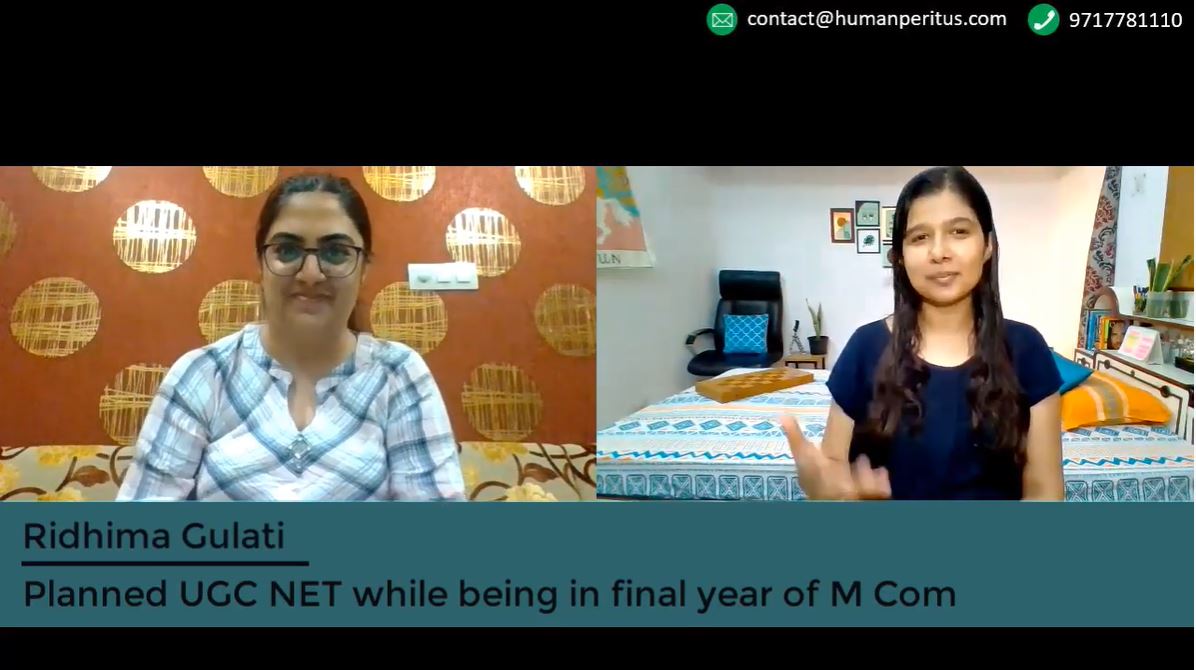
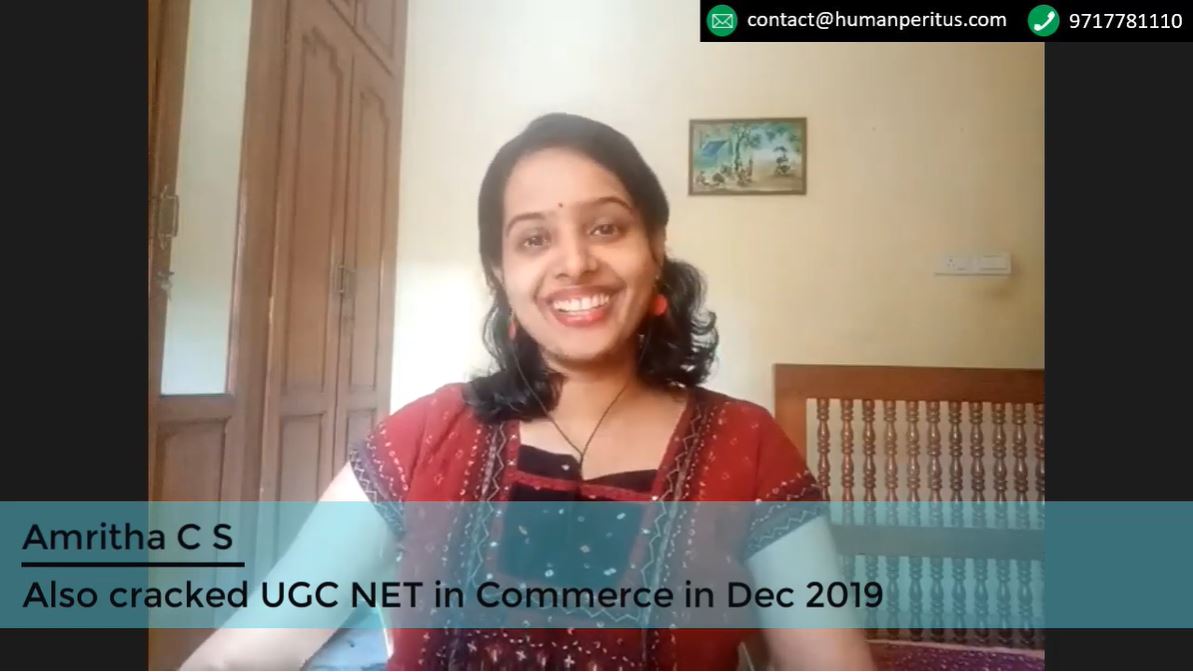
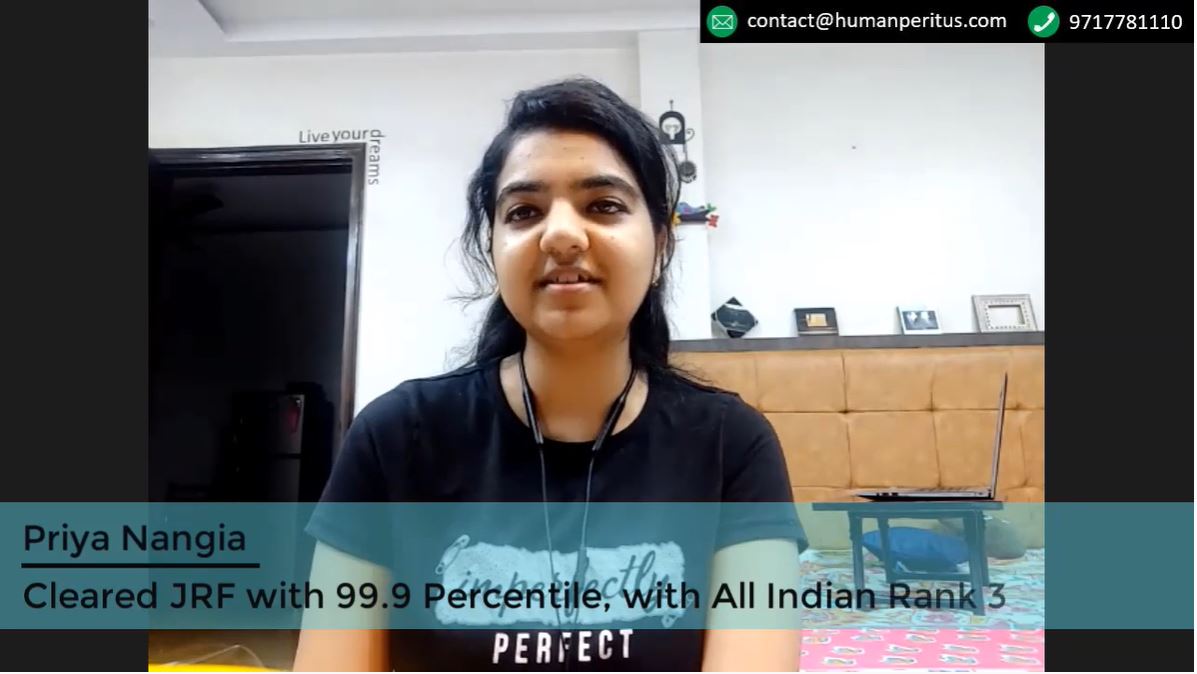
Over last 8 years, thousands of students have cracked exams with Human Peritus. We have interviewed some of them for you. Obviously they may speak nice words about Human Peritus. But, we have something else in mind, while advising you to watch these toppers.
The students have shared interesting insights about preparation strategy. All of them are from different backgrounds. You will find that your story is related to many of them. Some are working professionals, some are busy mothers, some are second year students, some are weak in Paper 1, some others in Paper 2, some are bored with corporate jobs, while some others are scared of Accounting, others do not like OB theories. Hear them to understand, how they did it. (Keep scrolling right)
Anything else, you want to ask, immediately “Contact Us”. Response within 24 in your mailbox from our experts.
Scan QR code to Chat

Email: contact@humanperitus.com
Phone: 9717781110
Address: Human Peritus, Floor 5, Building C, Unitech Cyber Park, Gurgaon, 122002